
Quick Answer: For most businesses with a few hundred or more dormant contacts, database reactivation produces faster ROI than buying leads, because there is no acquisition cost and the contacts already know the brand. Buying leads wins when the list is small, already worked, or the business is entering a new market. The strongest plan is usually to reactivate first, then use the results to set a ceiling on what new leads are worth paying for.
When the pipeline slows down, the reflex is to buy more: raise the ad budget, sign up for a lead marketplace, or purchase a list.
Meanwhile, the CRM already holds hundreds or thousands of people who once raised their hand, gave a phone number, and then went quiet because nobody followed up long enough.
Paying full price for strangers while past inquiries sit untouched is one of the most common budget leaks in a service business, and it usually goes unnoticed because the two costs live in different reports.
This comparison covers what buying leads actually costs in 2026, how the two options stack up on speed and cost per booking, the compliance risk in purchased lists, and when buying leads is still the right move.
Quick Summary: Database Reactivation vs Buying Leads Explained
| Cost of new leads | LocaliQ's 2026 benchmarks put the average search ad cost per lead at $66.69 |
|---|---|
| Cost of old leads | Already paid for; the remaining cost is outreach, tools, and staff time |
| Speed | Reactivation can reach the whole list in days; paid campaigns need time to test and optimize |
| Lead quality | Past inquiries know the brand; purchased leads may be shared or barely aware of it |
| Compliance | Consent obtained by a list seller does not automatically cover a new business's texts or calls |
| When buying wins | Small or exhausted databases, new markets, and new service lines |
| Best sequence | Reactivate first, measure cost per booking, then buy new leads up to that benchmark |
What Buying More Leads Actually Costs in 2026
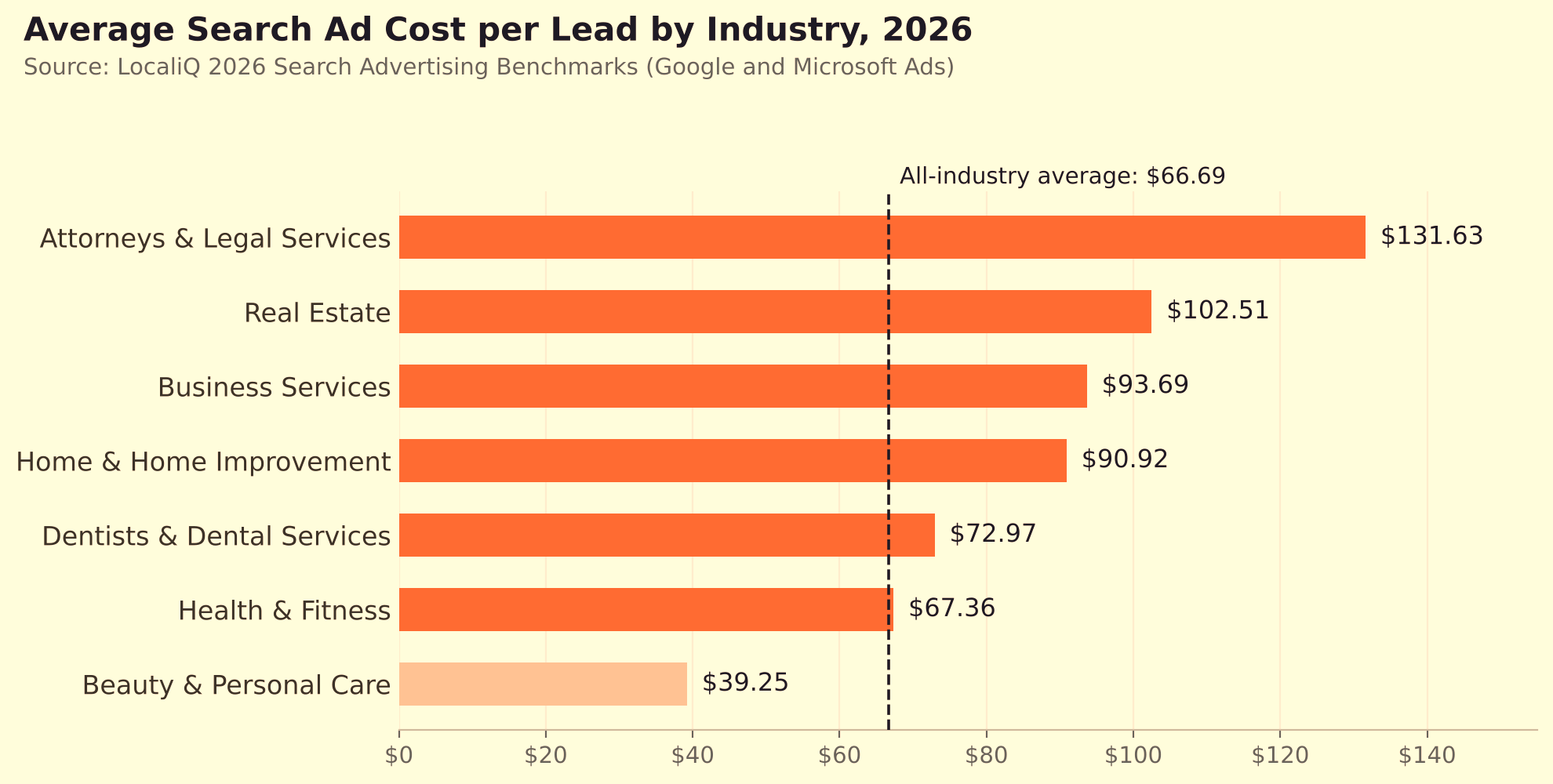
“Buying leads” covers three things: paid ads, pay-per-lead marketplaces, and purchased contact lists. Paid search is the most measurable of the three. According to LocaliQ's 2026 search advertising benchmarks, the average cost per lead across industries is $66.69, with an average conversion rate of 8.18%.
That average hides a wide spread. Legal services pay roughly three times what beauty and personal care businesses pay for the same form fill or call.
Pay-per-lead marketplaces and purchased lists are harder to benchmark. Marketplace leads may be shared with competing businesses, which turns every inquiry into a race, and purchased lists start losing accuracy from the day they are compiled.
A lead is also not a booking. A $90 lead that books one time in four costs about $360 per booked appointment before the sales team says a word, and that's before management fees or creative costs.
Which Creates Faster ROI? A Side-by-Side Breakdown
Faster ROI comes down to two things: how quickly money comes back in, and how much has to go out first. On both, the two options behave very differently.
The short answer: reactivation is faster when there is a list to work
A reactivation campaign starts with an asset the business already paid for. The first bookings can come from the first send, and there is no learning period where budget is spent finding the right audience.
| Factor | Database Reactivation | Buying Leads |
|---|---|---|
| Upfront cost | Setup, messaging, and tools; the contacts are already owned | Ad spend or per-lead fees before any lead arrives |
| Time to first booking | Days, once the list is cleaned and segmented | Usually weeks, while campaigns are tested and optimized |
| Relationship | Contact knows the brand and once asked for help | Contact may be cold or comparing several providers |
| Volume ceiling | Capped by the size of the database | Scales with budget |
| Compliance basis | The business's own consent records | Depends on how the seller collected consent |
| Cost per booking trend | Falls as more bookings come from the same fixed cost | Rises as budget pushes into more expensive audiences |
Time to first booking
Reactivation can reach every contact on a list in days. Paid campaigns typically spend their first weeks testing audiences, creative, and keywords before cost per lead settles.
That gap matters most for cash flow. A business that needs bookings this month gets them sooner from people who already asked for help once, while a new paid campaign is still spending budget to find out which audience and message work.
Cost per booked appointment
The fair comparison is cost per booked appointment, not cost per lead. Divide the total campaign cost by the bookings it produced, then do the same for paid leads, using the same definition of a booking on both sides.
Reactivation's cost is mostly fixed: list cleaning, setup, and messaging. Every extra booking from the same list lowers the cost of each one. Paid leads work the other way, since each new booking needs fresh spend, and pushing budget higher usually means bidding for more expensive audiences.
Where the speed edge actually comes from
Most of reactivation's advantage comes from follow-up speed, not the list itself. A 2011 Harvard Business Review study found that firms contacting leads within an hour were about seven times more likely to qualify them than those that waited longer.
Key Takeaway: Compare the two options on cost per booked appointment, measured the same way. Cost per lead flatters paid campaigns and hides how many leads never book.
The Evidence Behind the “5 to 25 Times Cheaper” Claim
Most articles on this topic lead with the claim that a new customer costs 5 to 25 times more than keeping an existing one. It usually traces back to a 2014 Harvard Business Review article by Amy Gallo.
That article introduces the range with “depending on which study you believe” and doesn't name the study behind it. The related claim, that small gains in retention raise profits sharply, comes from Bain & Company research Fred Reichheld published in the 1990s.
The direction is sound: a contact who already knows a business usually costs less to convert than a stranger. The exact multiple isn't, so the only number worth planning around is a business's own cost per booking from each channel.
The Hidden Costs on Both Sides
Neither option is free, and the costs that sink a campaign rarely show up in the headline number.
Hidden costs of database reactivation
List cleaning: bounced emails, disconnected numbers, and duplicates have to be removed before the first send.
Reply handling: a campaign that gets replies needs someone, or an AI agent, answering them within minutes.
Opt-out management: every unsubscribe has to be honored across email, SMS, and calls.
Over-messaging: too many touches in a short window damages the relationship the list was valuable for.
Hidden costs of buying leads
Management and creative: ad spend is only part of the bill once agency fees, landing pages, and creative refreshes are added.
Speed-to-lead staffing: paid leads go cold fast, so someone has to respond within minutes, all day.
Bad data: fake form fills, wrong numbers, and duplicate leads still cost the same to buy.
Consent checks: purchased contacts need verified consent records before any automated outreach.
When Buying Leads Is the Right Call
Reactivation is not a replacement for acquisition. A business that only works its existing list will eventually run out of warm contacts, so buying leads makes more sense in these situations:
The database is small: a few hundred contacts can be worked in an afternoon and won't sustain growth.
The list is exhausted: it has already been reactivated recently and the warm segments have responded.
The business is entering a new market: no existing contact has asked about a new city or service line.
Demand is seasonal: a busy season needs more volume than any past list can supply.
In those cases, the answer is a well-built acquisition engine rather than a bigger list purchase. Funnel Gator's multi-channel lead generation blueprint covers how Meta Ads, Google Ads, and SEO work together so new leads arrive steadily instead of in expensive bursts.
The Compliance Risk in Purchased Lead Lists
A purchased list carries consent the business didn't collect. Under the TCPA, automated marketing calls and texts need the recipient's prior express written consent, and the business making the call carries the risk if that consent doesn't hold up.
The FCC tried to tighten this with a one-to-one consent rule that would have required consumers to name each seller individually. In January 2025, the Eleventh Circuit vacated that rule in Insurance Marketing Coalition v. FCC, but the underlying written-consent requirement still applies.
Wireless carriers and messaging providers also set their own consent standards for business texting. A list that is technically legal to call can still get a sender's number filtered or blocked.
⚠ Warning: Before texting or auto-dialing any purchased lead, get written proof of how and when consent was collected and which seller names it covers. TCPA statutory damages run $500 to $1,500 per violation, per message.
The Best Answer for Most Businesses: Reactivate First, Then Buy
The two options aren't really competitors. Reactivation produces the fastest return and, just as useful, a real cost-per-booking number from the business's own data.
That number then becomes the ceiling for acquisition. If reactivated bookings cost $150 each, any paid channel that can't get close to that figure needs fixing before it gets more budget.
Funnel Gator's database reactivation service starts with a list audit and a pilot on one segment, so a business sees its own reply and booking rates before committing to a full campaign or a bigger ad budget.
In our experience, the businesses that get the most from both channels run reactivation as a standing monthly process and send new paid leads into the same follow-up system, so no inquiry ever goes quiet for lack of a second message.
Watching good money go to strangers while warm contacts sit untouched is frustrating, especially for owners who paid for every one of those old inquiries once already. Reactivation is how that spend finally pays off.
Pro Tip: Pause any planned increase in ad spend for 30 days and run a reactivation pilot on the warmest segment first. The result gives a real cost-per-booking benchmark to judge the new spend against.
Who This Guide Is For (and Who It Isn't)
This comparison fits service businesses with at least a few hundred past inquiries or customers in a CRM, deciding whether their next marketing dollar should go to new leads or to the contacts they already have.
It's less useful for brand-new businesses with no contact history, or for companies whose database has been reactivated recently and already responded, where acquisition is the only real lever left.
Want to Know What Your Database Is Worth Before Buying More Leads? Book a Free Strategy Call
Funnel Gator will audit the current contact list and estimate which segments are worth reactivating before any new ad budget is spent.
A review of dormant inquiries, lost deals, and past customers
A reactivation pilot plan for the warmest segment
A cost-per-booking benchmark to judge future ad spend against
No payment, no pressure, just a plan.
Final Verdict: Reactivation Is Faster, Acquisition Is Bigger
On database reactivation vs buying leads, speed favors reactivation for almost any business with a real list. The contacts are already paid for, they already know the brand, and outreach can reach all of them in days instead of waiting for paid campaigns to optimize. Buying leads still matters for volume, new markets, and small or exhausted databases, but it works best once reactivation has set a cost-per-booking benchmark to beat. Measure both on cost per booked appointment, keep purchased lists away from automated texting without solid consent records, and run both channels through the same follow-up system.
Funnel Gator builds that system inside GoHighLevel, so old contacts and new leads both turn into booked calls.