
Quick Answer: Database reactivation for med spas means re-contacting past inquiries and patients already in the booking system and CRM, then moving them back to a booked consultation. It works best when outreach is timed to the treatment cycle, such as around three months after a neurotoxin appointment, and when every message stays within the consent the patient originally gave.
Most med spas have hundreds of names sitting in their booking software that never turned into a second visit: an inquiry about lip filler from last spring, a consult that ended with “let me think about it,” a neurotoxin patient last seen in January.
Meanwhile, the ad budget keeps going toward strangers who have never heard of the practice.
Every one of those older names already knows the spa, already trusted it enough to share a phone number, and in many cases already has results that are starting to fade on a predictable schedule.
This guide covers how to segment that list, when to reach each group, which channels to use, where AI fits, and how to stay compliant while doing it.
Quick Summary: Database Reactivation for Med Spas Explained
| What it is | Re-engaging past inquiries and patients already in the system instead of buying new leads |
|---|---|
| Repeat business | AmSpa's 2024 industry report found 73% of med spa patients are repeat patients |
| Best timing | Tie outreach to treatment cycles, such as neurotoxin results that typically last 3 to 4 months |
| Key segments | Unbooked inquiries, consults that never booked, overdue patients, and one-time patients |
| Channels | SMS, email, and AI voice, chosen by the consent each patient originally gave |
| Compliance | Keep treatment details out of texts and follow HIPAA and TCPA consent rules |
| Success metric | Booked consultations and kept appointments, not replies or clicks |
What Is Database Reactivation for a Med Spa?
Database reactivation is the practice of re-engaging contacts a business already has, instead of paying to acquire new ones. For a med spa, those contacts usually fall into four groups with very different needs.
Unbooked inquiries: people who asked about a treatment by form, call, or DM and never scheduled.
Consulted, never booked: people who sat through a consultation and left without a treatment date.
Overdue patients: regulars whose last treatment results are fading on a known timeline.
One-time patients: people who tried one treatment and never came back for anything else.
Lead database reactivation, the first two groups, is about turning interest into a first consultation. Patient reactivation, the last two, is about bringing someone back on schedule. Treating all four the same way is where most campaigns go wrong.
Why Treatment Cycles Should Set the Reactivation Calendar
Most reactivation advice uses generic windows like 90 or 180 days since the last visit. Med spas have something better: treatments with results that fade on a timeline patient already expect.
The short answer: reach out just before results fade
A message that arrives as results start to wear off feels like a reminder from a provider, not a sales pitch. A message that arrives a year late has to restart the relationship from scratch.
Neurotoxin patients
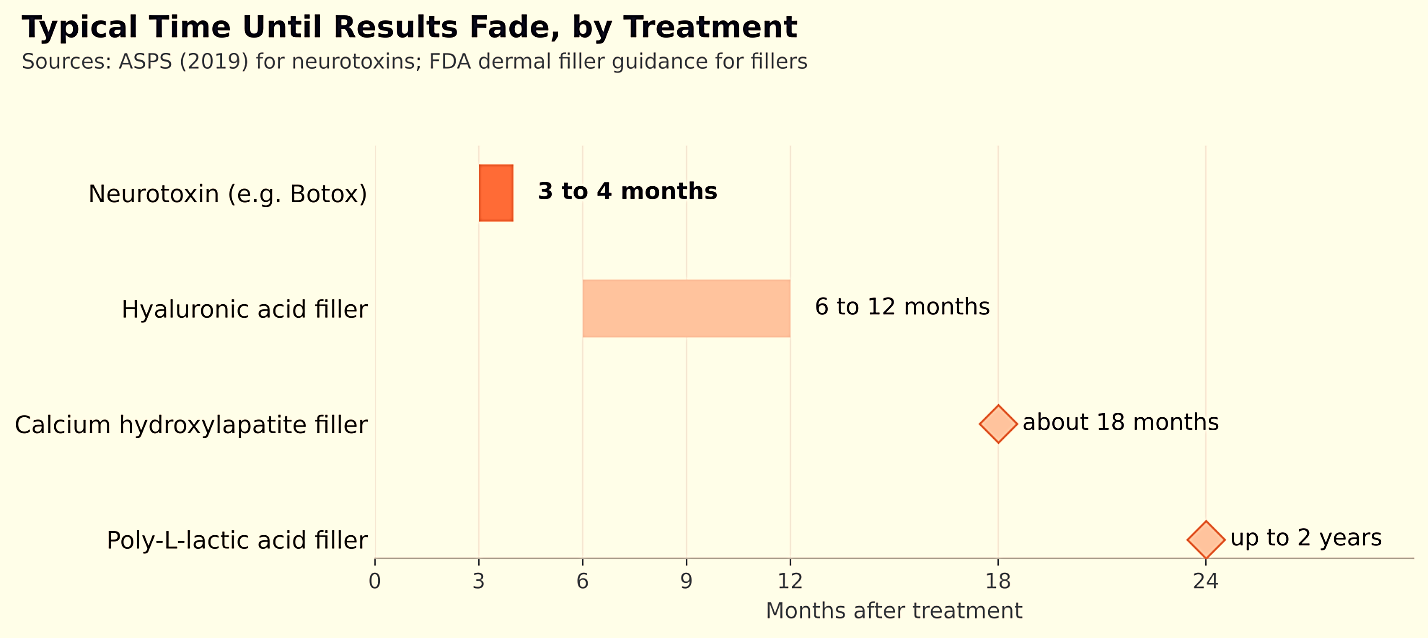
According to a 2019 article from the American Society of Plastic Surgeons, Botox generally lasts three to four months. That makes neurotoxin patients the shortest and most predictable reactivation cycle in the database.
Dermal filler patients
FDA guidance on dermal fillers puts hyaluronic acid results at roughly 6 to 12 months, calcium hydroxylapatite at about 18 months, and Poly-L-lactic acid at up to two years. Each product needs its own timing, which means the database has to record which filler was used.
Old inquiries with no treatment history
Inquiries have no treatment clock, so timing follows the inquiry date instead. The opening message should answer the question the person originally asked, not push a generic special.
| Segment | When to reach out | Opening angle | Best channel |
|---|---|---|---|
| Neurotoxin patients | Around 3 months after the last visit | Results typically fade at 3 to 4 months | SMS, if consented |
| Hyaluronic acid filler patients | Around 6 to 9 months after the last visit | A touch-up before results fade fully | SMS or email |
| Consulted, never booked | 2 to 6 weeks after the consult | The specific concern raised in the consult | Call or SMS |
| Unbooked inquiries | 30 to 90 days after the inquiry, then quarterly | The question they originally asked | Email first |
| One-time patients | 6 to 12 months after the visit | A complementary treatment or new provider |
These windows are starting points, not rules. A provider's own rebooking recommendations for each patient should always take priority over a blanket schedule.
Database Reactivation Steps for a Med Spa: Quick Checklist
The method below is how to reactivate a database to generate new consultations without burning the list. Each step depends on the one before it.
Step 1: Export, clean, and merge the list
Pull contacts from the booking or EMR system and the CRM into one list. Remove duplicates, flag anyone who opted out, and confirm which channels each person actually consented to.
Step 2: Segment by status and treatment
Split the list into the four groups above, then split patients further by treatment and last visit date. A neurotoxin patient and a filler patient last seen in the same month need different messages at different times.
Step 3: Write a treatment-specific opener
The first message should sound like it came from the front desk, not a marketing tool. “It's been about three months since your last appointment; want us to hold a spot this month?” works better than a discount blast.
The sequence logic behind those messages, how many touches, how far apart, and in which channel order, follows the same database reactivation strategies that work across industries. For med spas, the difference is the timing and the opening line.
Step 4: Route every reply to a consultation slot
A reply that sits unanswered for a day is a lost booking. Every positive reply should land on the calendar with one link, one call, or an AI appointment setter that helps book consultations.
Step 5: Track booked consultations, not replies
Tag each booking with the campaign and segment that produced it. Replies feel like progress, but only kept appointments show whether a campaign is paying for itself.
AI Database Reactivation and Reactivation Bots: what's the difference
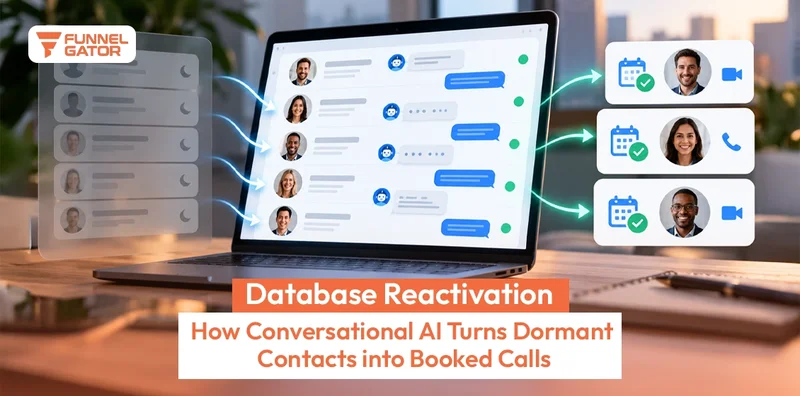
AI database reactivation uses a text or voice agent to hold the first conversation, answer simple questions about pricing, downtime, and availability, and book the consultation directly.
A database reactivation bot is useful for volume and speed, especially after hours. It should never answer clinical questions about candidacy, side effects, or medical history; those need a hand-off to a licensed provider.
Voice agents carry an extra rule. In a February 2024 declaratory ruling, the FCC confirmed that AI-generated voices count as “artificial” voices under the TCPA, so the same prior consent rules apply as for any automated call.
Key Takeaway: The AI's job ends at a booked consultation. Anything that touches candidacy, safety, or medical history belongs with a provider, not a bot.
Database Reactivation Stats That Matter for Med Spas
The case for reactivation in this industry is built into how patients behave. The AmSpa 2024 Medical Spa State of the Industry report found 73% of med spa patients are repeat patients, up from 65% in its 2022 report.
The same report counted roughly 10,488 med spas in the U.S. as of 2023, averaging 245 patient visits per month. A list that size builds up faster than most front desks can follow up on it.
One limitation: there is no audited, industry-wide booking rate for med spa reactivation campaigns. Any vendor quoting a fixed percentage is drawing on its own client data.
Staying Compliant: HIPAA, TCPA, and Consent
Med spas that operate under a medical director often hold protected health information, and that changes how reactivation messages should be written.
Under HHS guidance on HIPAA marketing, a communication describing a covered entity's own health-related services, or made for the patient's treatment, is generally not considered marketing that requires authorization. That exception does not cover sharing patient data with third parties in exchange for payment.
Consent is a separate question. Automated texts and calls still need the right consent under the TCPA, and U.S. carriers require business texting numbers to be registered before sending at volume.
⚠ Warning: Keep treatment names and medical details out of SMS previews. “Time to book your next appointment” is safer than naming the treatment on a lock screen someone else might see. Have a healthcare attorney review the program before launch.
Common Mistakes in Database Reactivation (and Best Practices)
Most reactivation campaigns that fail make one of the same few mistakes:
Leading with a discount: it trains patients to wait for the next offer and cuts margin on people who would have rebooked anyway.
Blasting the whole list: one message to every segment reads as spam to all of them.
Ignoring opt-outs: anyone who unsubscribed must stay suppressed across every channel.
Slow follow-up: a reply answered the next day often goes cold again.
Mixing results with new leads: without separate tracking, nobody can tell whether the campaign worked.
Patients who lapsed often feel a little awkward about coming back after a long gap. A warm, low-pressure message that makes returning feel normal does more for bookings than any offer.
Pro Tip: Run the first campaign on overdue neurotoxin patients only. It is the most predictable segment, and the results give the practice its own booking rate to plan the rest of the list around.
Running It In-House or with a Database Reactivation Service
A small practice with a few hundred contacts can run a simple campaign in-house, as long as someone owns the replies every day. Larger lists, multiple providers, or AI voice outreach usually need a dedicated setup.
Funnel Gator's database reactivation service starts with a list audit and a pilot on one segment, then routes qualified replies straight to the front desk with reporting on sends, replies, and booked appointments.
In our experience, the practices that see the fastest return are the ones that treat reactivation as a standing monthly process tied to treatment cycles, rather than a one-off campaign after a slow quarter.
Who This Guide Is For (and Who It Isn't)
This guide fits med spas and aesthetic clinics with at least a year of booking history, a mix of injectable and recurring treatments, and a front desk that can't personally follow up with every past inquiry.
It's less useful for brand-new practices without a patient history, or for clinics without documented consent records, which should fix their intake and consent process before running any outreach.
Ready to Turn Old Inquiries Into Booked Consultations? Book a Free Strategy Call
Funnel Gator will review the patient and inquiry list and show which segments are ready to reactivate first.
An audit of past inquiries, consults, and overdue patients
A treatment-cycle reactivation calendar built for the practice
A pilot campaign with booked consultations tracked from day one
No payment, no pressure, just a plan.
Final Verdict: The Best New Patients Are Already in the System
Database reactivation for med spas works because the timing is already built into the treatments. Neurotoxin and filler results fade on schedules patients understand, and old inquiries have already shown interest in a specific service. The practices that get the most from their lists segment carefully, time outreach to treatment cycles, keep medical details out of texts, and route every reply to a consultation slot within minutes. Track booked consultations rather than replies, and the campaign shows exactly what it is worth.
Funnel Gator builds these reactivation systems inside GoHighLevel so med spas can fill their calendars from contacts they already have.